What's in a Name?
Part of the Wallands Park Estate

Photo © Alan Chapman
Wallands Park, Lewes:
A survey of street names in the Wallands, and house names in King Henry’s Road, Lewes
A survey of street names in the Wallands, and house names in King Henry’s Road, Lewes
In the beginning......
King Henry’s Road is part of Wallands Park, and you can still see a stone plaque set into the flint walls either side at the bottom of Prince Edwards Road (as you turn off the Offham Road). Broadly speaking, Wallands Park includes the following Victorian and Edwardian roads: Leicester Road, Valence Road, Prince Edward's Road, King Henry's Road and De Warrenne Road.
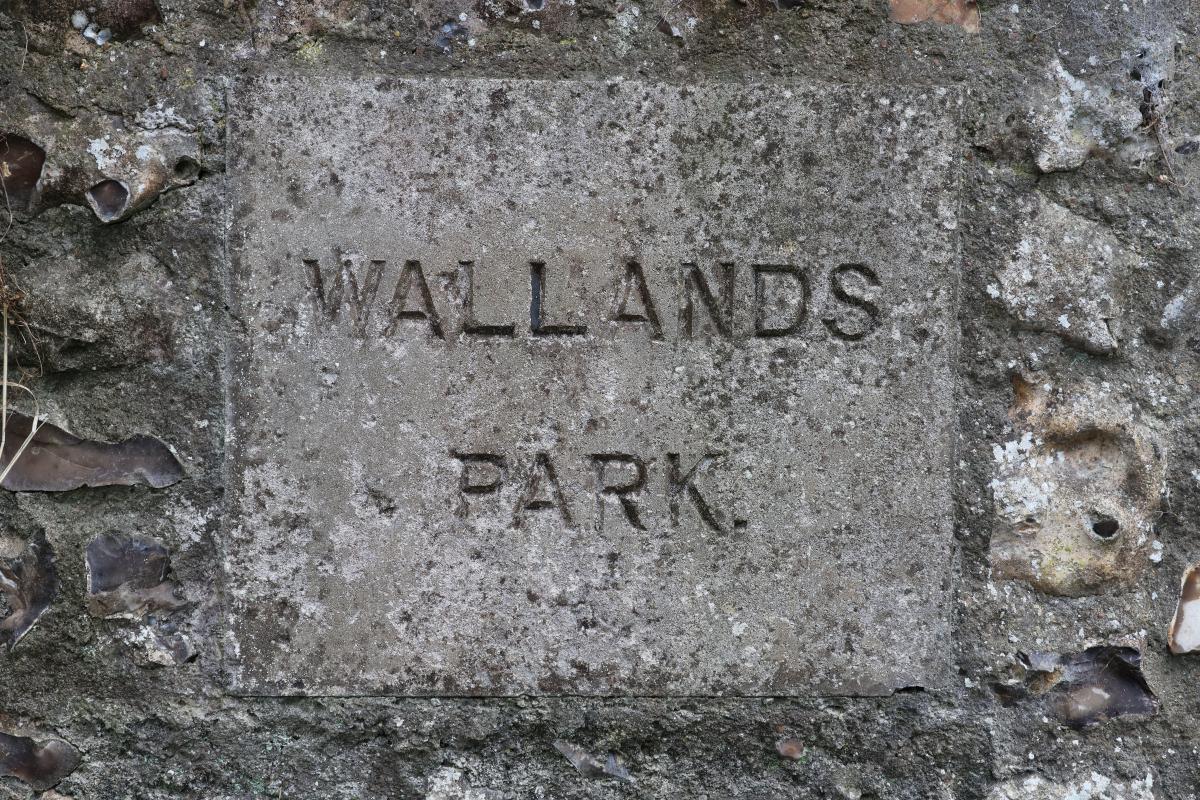
The earliest reference I could find for the Wallands goes back a long way, to the reign of Henry VIII. "The open arable land called The Wallands" (in Valor Ecclesiasticus "Walland sub Castro") a portion of the tithes of which belonged to the Priory of St Pancras; valued in the time of Henry VIII at £4 13s 4d.
Ref: Wallands. Sussex Archeological Collections vol.XIII p.10. But I have since been provided with another reference where “Wallond” is mentioned in a Lewes Deed of 1470, from the archives of the Pelham Family of Stanmer. There has been much speculation as to the meaning of “Wallands” since then – the most obvious explanation being that the lands were enclosed by a wall. Mawer & Stenton Place-names of Sussex say they were arable lands just outside the town walls.
But this “King Henry’s Road” does not reference Henry VIII but Henry III, who was defeated by his nobles at the Battle of Lewes in 1264. His son was Prince Edward, the future king Edward I. The names of many of the adjacent roads recall participants in the Battle of Lewes: Prince Edward’s Road; then De Montfort Road and Leicester Road for Simon De Montfort, 6th Earl of Leicester, who led the rebel army; Valence Road for William de Valence, 1st Earl of Pembroke, who supported the King; Fitzjohn’s Road for John Fitzjohn, another of the rebel leaders. Segrave Close was surely named for Nicholas de Segrave, 1st Baron Segrave, again one of the rebel supporters, and an important baronial leader during Henry IIIs reign.
De Warrenne Road and Gundreda Road appear to reference a different era, the 11th Century and the Norman Baron William de Warenne, Ist Earl of Surrey with his wife Gundrada, founders of Lewes Priory. Although one might equally argue - for De Warrenne Road, John De Warenne, 6th Earl of Surrey, another of the King’s supporters in the Battle of Lewes.
When King Henry is mentioned, many people only think of Henry VIII, and this has led to some unfortunate choices of name for some of the twentieth century closes (five in all) leading off King Henry’s Road.
“Cromwell Place” for example, in the grounds of No.24: Thomas Cromwell was Henry VIIIs chief officer. Likewise “Queen Anne’s Close” developed c1982 on the site of "The Lodge" otherwise 1 King Henry's Road, was probably chosen with Anne of Cleves, Henry VIIIs fourth wife, in mind, prompted by our Lewes museum at Anne of Cleves House, although she never lived there. Less likely perhaps, but Anne Boleyn, Henry VIIIs second wife, could also qualify here.
“Eleanor Close” built on the site of No.15: was possibly chosen for Eleanor of Aquitaine, the wife of Henry II, although Henry III did marry Eleanor of Provence in 1236, which would be the historically correct choice.
“Segrave Close” is presumably for Nicholas de Segrave (see above);
“Sackville Close” is justified by a long standing Sussex connection the Sackville family, going back to William the Conqueror. But Sir Jordan Sackville sided with those rebellious barons led by Simon de Montfort against King Henry III, so he is probably the correct Sackville here.
So - “What’s in a name? That which we call a rose by any other name would smell as sweet”. Shakespeare’s lines are often quoted, but I’m not sure the Victorian owners of houses in King Henry’s Road and De Warrenne Road would agree with principle behind those words – that it really doesn’t matter what name you give to an object: its essence remains the same. And here’s another saying for you – “An Englishman’s home is his Castle” and that, I think was the guiding principle in choosing a name for one’s new home.
House numbers have been in use in the UK in some places since the eighteenth century, but the systems were many and various, with no standardisation - Poor postman! Numbering was introduced in London, with much encouragement from the Post Office, in 1855. (Metropolitan Management Act) The Post Office was never actually in charge of house numbering, because the Act made this a local authority responsibility.
House numbers were not deemed necessary in the Wallands until after the Great War (1914-1918) and so those newly built houses, from the 1890s onward, needed a house name, an address for the postman to be able to deliver letters. But out of some thirty homes in King Henry’s Road, a third had one or more changes of name as new owners took over, before house numbers were allocated and generally used. The 1921 Census identifies households by house number for the first time.
The Naming:
We can start with the most obvious examples, the self-explanatory ones -“The Lodge” (No.1) possibly the first house to be built in King Henry’s Road in the 1880s; “Garden Cottage” and “Long Cottage”; both post WW2 buildings, in the grounds of No.34.
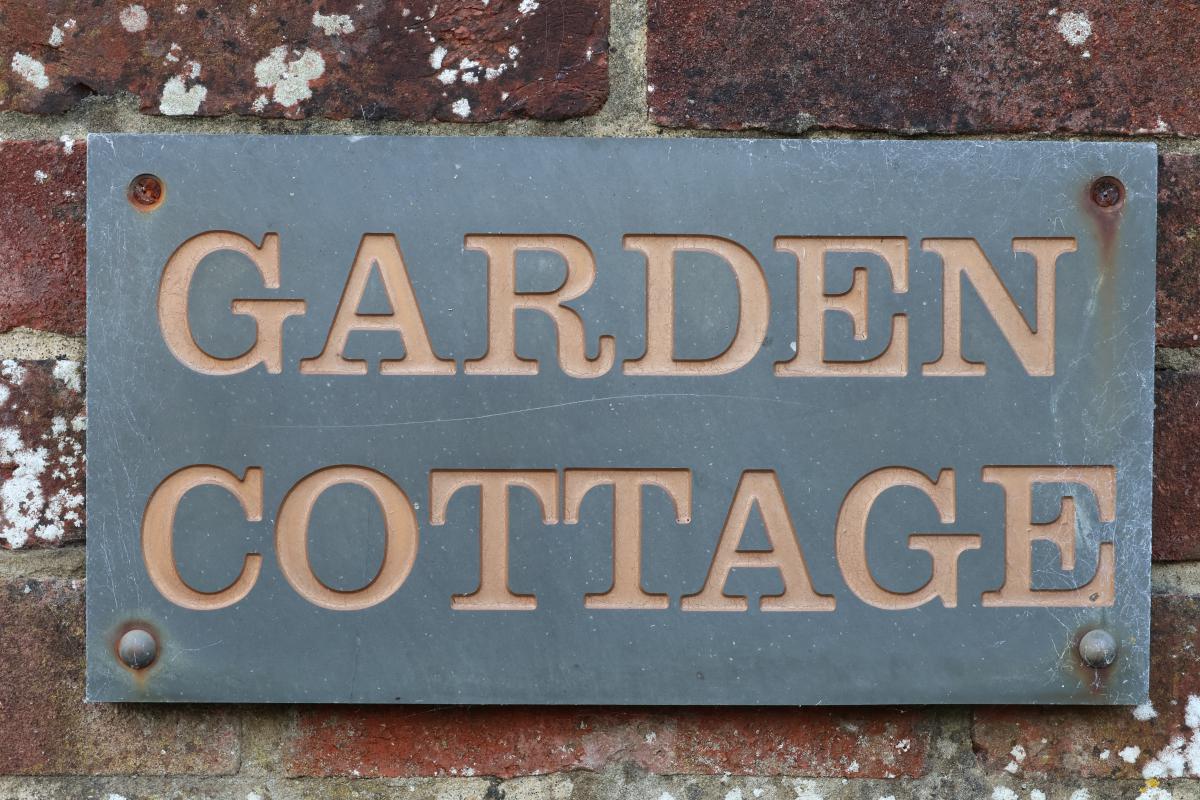
After that, things get more interesting, but I’ll start with the least exciting ones: those inspired by the local topography: “Downside” (no.4); “Downend” (no.33) and “Downside Hotel” (no.35). I think “Wealdham” (no12) falls into this category too, though we all know that Lewes does not lie in the Wealden District.
No.34: “Wallands House”c1910. This would have been an obvious choice for one of the larger houses in the Wallands Park. I’m surprised no one else thought of this first. In 1910 the Misses Shiffner (Elizabeth 48 and Eleanor 42) came to live in King Henry’s Road, with their three servants, at least one of whom had been with the Shiffner family, as a lady’s maid, for a very long time. The sisters hadn’t come far – from Coombe Place, Hamsey, where they had lived all their lives until then.
By far the largest category is the place-names: they span the whole of the British Isles. Now this has to be a matter of speculation, but from the mid-nineteenth century onward, opportunities for travel were greatly improved by the development of the railways,. With that came the opportunity for family holidays, and the chance to explore further afield, for the middle classes at any rate. By the late 1870s day trips for the less well off were also a possibility. So there lies one possible explanation for the choice of a house name – but of course there are other explanations. Perhaps the new owners just liked the sound of a particular name, or came across it in a book, or saw it in a painting.
Here I should add that the kind of people who could afford to move into the Wallands were, by & large, those who had already made their way in the world. They were numbered in the professions, and successful merchants, with a not insignificant count of elderly retired ladies “of independent means”.
So, now to some more house names…..let’s deal with all those place names first, as they are by far the largest group.
No.3 “Tor Bryan”: is a twentieth century addition to King Henry’s Road (1963) “Tor Bryan” is the name of a village in the Teignbridge district of Devon – so a holiday destination perhaps?
Nos. 5 and 5A King Henry’s Road: “Saffrons” and “The Palms”: again, twentieth century additions to King Henry’s Road. No.5a definitely has a palm tree growing in the garden.
No.7 “Wickham”. The Concise Oxford Dictionary of Place Names has this name appearing in several English counties. One suggestion from the Old English is simply ‘a dwelling or a manor but I cannot tell where Thomas Chatfield found his inspiration. “Wickham” is more easily recognisable today as housing the junior department of Lewes Old Grammar School. In the 1930s it was a nursing home, and by the 1940s repurposed for education: Leicester House School which later became Lewes High School for Girls.
But “Wickham” was first occupied by Thomas Chatfield (1885). Thomas Chatfield was a timber merchant, who invested in various properties in King Henry's Road as well as being resident there. In fact he was the property developer, from the outset, for the eastern half of King Henry's Road. His name appears on very many early indentures relating to plots 199, 200, 201 & 202. He bought all these plots and then used them as collateral to raise monies to build houses on the land. Thomas Chatfield, in turn, issued mortgages to various builders to commence work.
As the home of the Junior Department of Lewes Old grammar School, no.7 is currently called Morley House - for Agnes Morley, the 16th Century founder of the original Lewes Grammar School. This is the fairly recent choice of the School’s Governors or the Headmaster.
No.21 “St Magnus”: For St Magnus the 11C Martyr or possibly St Magnus Cathedral, Kirkwall, Orkney, Scotland. The first owner, William Alfred Pollard, was Chief Clerk to the Corporation of the Borough of Lewes, and he lived at St Magnus from 1910 until his death in 1936.
No.27 “Cairn Reigh” obviously does not belong with the local topography. The name is an anglicized spelling of the Scottish Gaelic for ‘the King’s Cairn’.
The Oxford Concise Dictionary suggests another meaning: “reigning” as of a winner, champion etc or currently holding the title. This sounds more like the choice of a race-horse trainer! But then I have to thank Professor Richard Coates for the following: “Mr Butchers trained a horse of this name for a Mr C T Polley in about 1907. Maybe that made his fortune and he expressed his thanks on his gatepost”. [Cardiff Evening News, 17 March 1907]
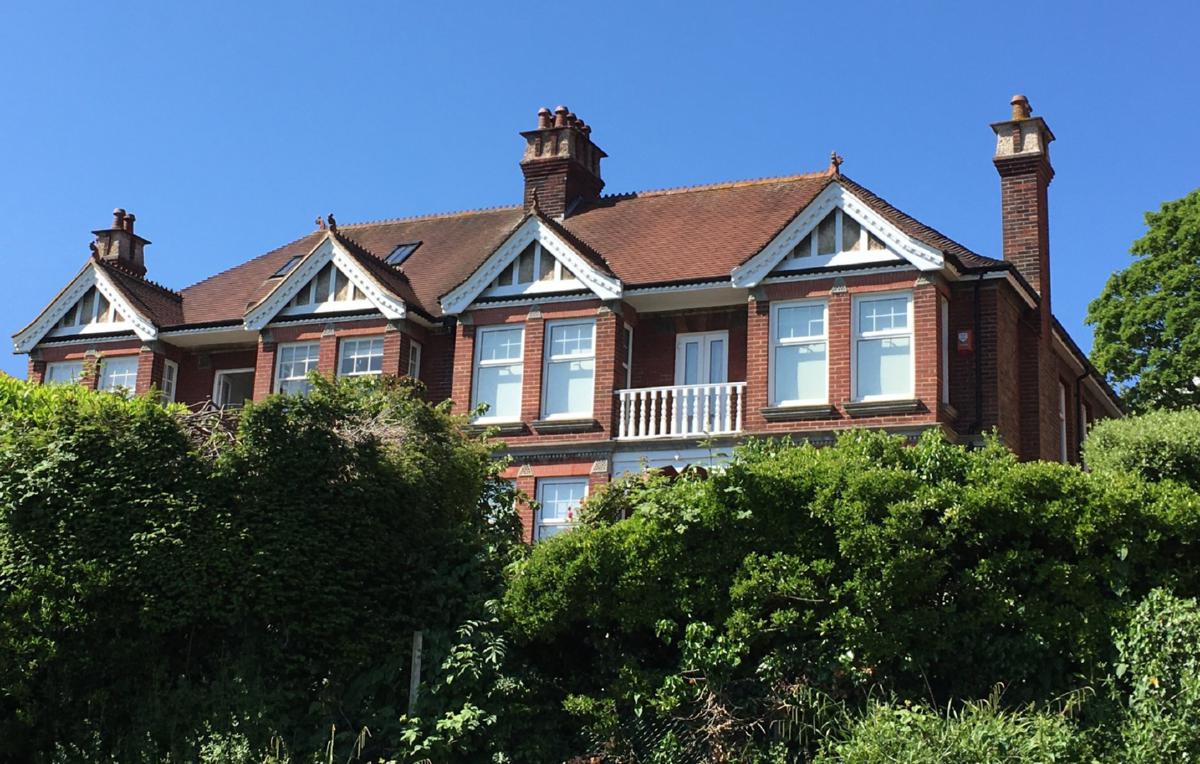
No.29 “Glenavon”: There’s a Glenavon near Larkhall (Lanarkshire) and one near Linlithgow (West Lothian) both in Scotland, but the name is quite popular as a house name. First owned by Frederick Butchers (a relative of George Butchers who lived at No.27) and rented out to the Palmer family.
No.31 “Chatteris”: Chatteris is a market town situated in The Fens between Huntingdon, March and Ely. Martha Russell, a young widow with two children, was the first occupier in 1911. Mrs Russell was born in Sussex, so the choice of house name could be either a holiday destination, or to commemorate a family connection. Some time later no.31 had a change of name to “Dunrobin” for Dunrobin Castle near Golspie village, on the east coast of the Northern Highlands.
No.2 “Coningsby”: A town in the East Lindsey district of Lincolnshire and also the title of one of Disraeli’s novels (much read in Victorian times). “Coningsby” has had eleven owners to date, and even more occupiers, presumably as tenants. Reginald Henry Powell, an estate agent (1851-1933) was the first owner (he owned other property in Lewes as well) and presumably he chose the name of the house, but I have been unable to find a good link between Mr Powell and the house name.
No.8 “Fairhaven”: Possibly for Fairhaven Lake, near Lytham St Annes, in Lancashire. Unfortunately the house name is not recorded in the 1891 Census, when it was newly occupied.
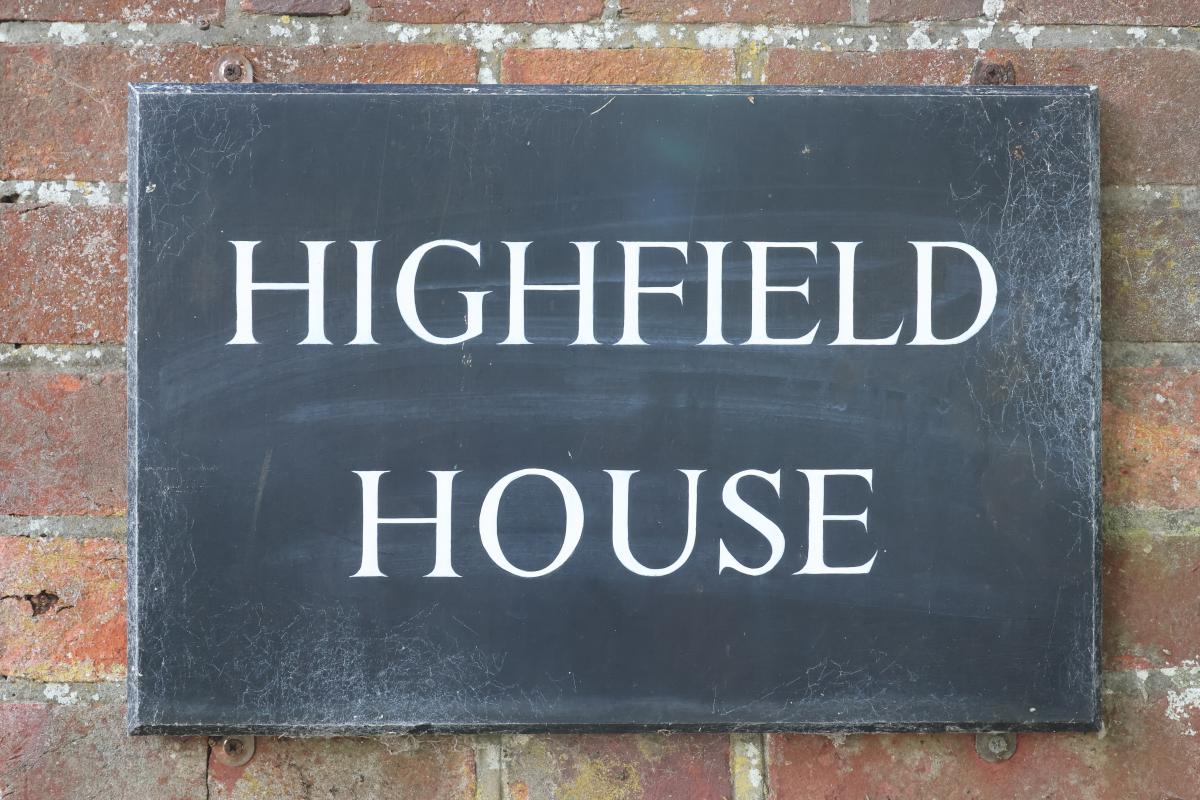
No.18: “Highfield”. This could also be just another topographical name, as the Wallands estate was once just chalk downland. “Highfield” has a handsome slate tablet with the house name prominently displayed on one the brick pillars, so it’s still in use.
No.20: “Sunnycroft”: first occupied in 1895; a descriptive name for a very fine Victorian house with a splendid turret; sadly demolished in the 1980s to make way for six new ‘town houses’.
No.22: “Roslyn”. Possibly for Roslin (with an ‘i’) a village in Midlothian, Scotland, south of Edinburgh.
No.24: “Ailsa Craig”: for an island in the outer Firth of Clyde, Scotland. The first owner (from 1892) was George Wightman, the Iron Merchant & Iron Founder.
Many of us can still remember the Wightman & Parrish hardware store in the High Street. In 1915 Frederick William Parrish joined forces with George John Wightman in Lewes to form Wightman & Parish, establishing an ironmonger’s store. The company name is still inexistence, but the firm has changed direction since those early days, and now promotes health and hygiene products.
Nos. 26 & 28:originally empty plots. Segrave Close was developed in 1965. A planning application for seven houses was made and approved in 1964. This was the site of plots once intended to be developed as nos. 26 & 28 King Henry's Road. No.28 King Henry's Road, a small new house, was built on a 'brownfield' site in October 2009 (with an old garage, now refurbished, on land adjacent to Segrave Close.
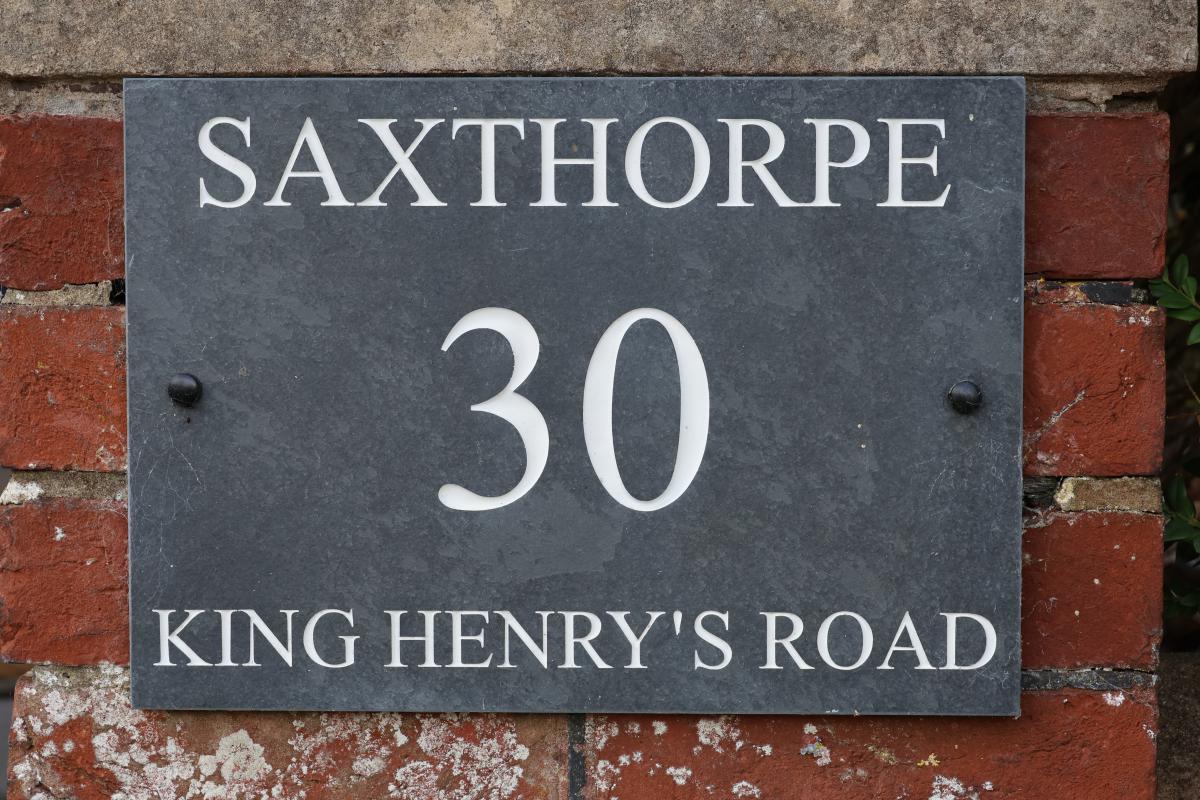
No.30: “Saxthorpe” is probably for a village in Norfolk. The first occupier of no.30 was Albion Russell (of Russell & Bromley shoe shop fame) with his wife and their seven children. This house name is still in use today, handsomely engraved on a slate plaque
House names derived from place-names with a close family association or a patronymic.
No.25 “West Ella”: the unmarried Parker sisters – Osca and Pauline – lived at no.25 from when the house was new (1910) until they died in 1944 and 1947 respectively. They named their new home “West Ella”. A quick check on my part revealed that West Ella is a small village near Kingston upon Hull, in the East Riding of Yorkshire. One suspects that West Ella had some strong family associations for them, since the Parker sisters were born (just a year apart) in Elloughton, Beverley, Yorkshire, not far from West Ella.
No.15 “Lindholme”: the name of a village near Doncaster, South Yorkshire. Joseph Hopkins, who was the first owner in 1910, was born in Cadney-cum-Howsham in Lincolnshire – a different county, but the villages are only about 30 miles apart, so it is not unreasonable to imagine a family connection there.
After his demise in 1912 (as a widower aged 71) the next owner, a Mr JCH Martin, saw fit to keep the house name. Sadly no.15 was demolished in the 1950s; the two large blocks of flats which now form Eleanor Close were built on that site in the 1970s.
No.23 “Dovedale”: Named after a valley in the Peak District (Staffordshire / Derbyshire) now owned by the National Trust. David Roberts, the first owner of Dovedale in 1911 was the Borough Surveyor for Lewes at the time. The family originated in Ashbourne, Derbyshire, where Mr Roberts’ two oldest children were born. (The next two children were born in Lewes.) Ashbourne is very close to the beautiful valley called Dovedale. I hope they were happy in their Lewes home, but the naming of their new house was a ‘no-brainer’ I think. Subsequent owners did not change the house name.
No.10 “Amatola”: This unusual name may derive from a range of mountains in the Eastern Cape Province of South Africa. The Rev’d A J Baxter, an Independent Minister owned no.10, but it was rented out to Ezekiel Dyer, a journalist and newspaper editor. By then a widower, Mr Dyer moved in with 4 of his six children. In 1903 Mr Dyer moved from no.10, around the corner to No.3 De Warrenne Road, taking the name “Amatola” with him. I conclude from this that the name must have been important for him or his family
A passing note on Rev’d Baxter: Rev Andrew Joseph Baxter (1834-1908) became Pastor of the Cavendish Chapel in Eastbourne in 1867. He was the Chapel's second minister, and remained there for 40 years. He started out as an engraver with his uncle in London and some of his first engravings were shown at the Great Exhibition of 1852. He then entered the ministry and preached in London, later moving to a church in Nottingham, and eventually coming to Eastbourne in 1867. Baxter became a prolific writer on religious topics and claimed to be able to read the Scriptures in Hebrew, Chaldee and Greek, despite never having had a college education. Rev’d Baxter’s connection to “Amatola” must remain a mystery. There is no biblical connection that I can find.
The next owner of No.10 (from 1903) Rev’d Burgess Wilkinson, chose “Compton House”. His wife’s second given name was Compton. I have found only two examples of a family patronymic being used for a house name, and this is one of them. Just to confuse the postman, no.16 was originally known as Compton House from 1891 until 1903, while the Wilkinson family lived there. I don’t know where this family moved to next, because they did not live in no.10 but rented it out.
No.32 “Roseneath”: Rosneath is a village in Argyll & Bute, Scotland. The first occupant was a Church of England clergyman, George Blake and his family (1901-1910).
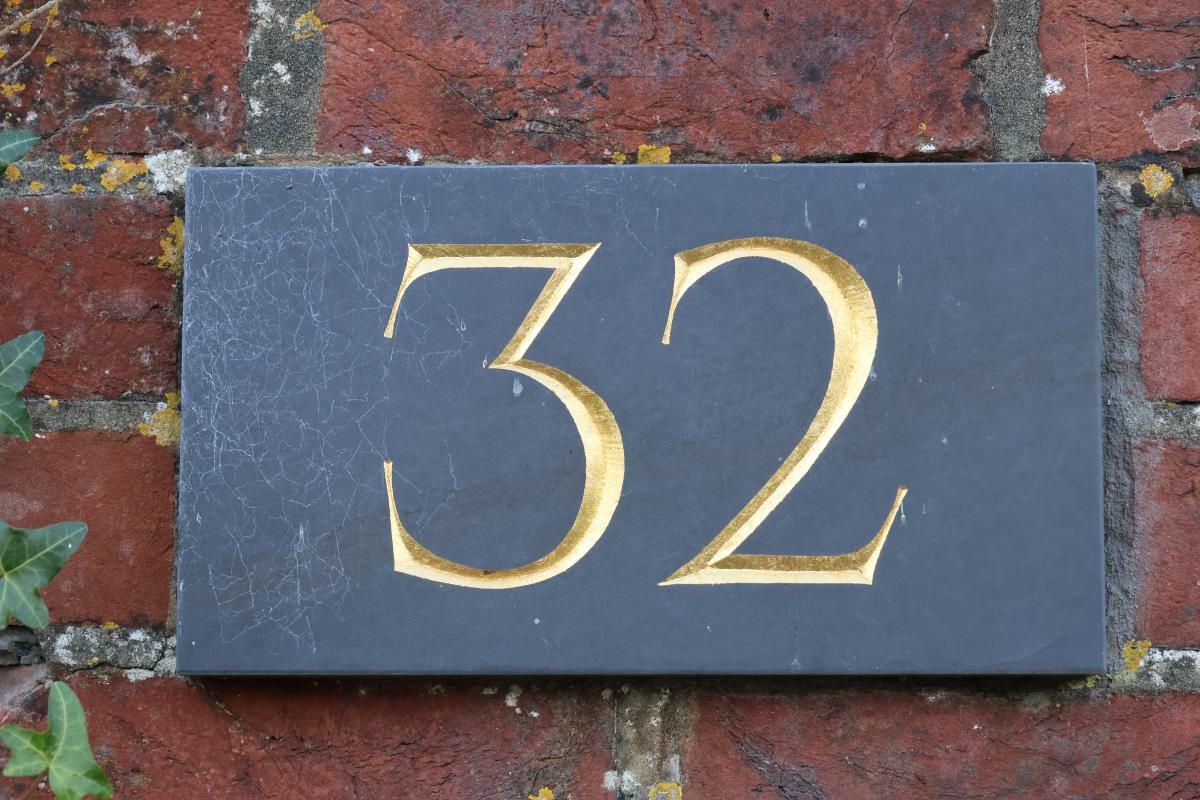
But after a decade “Roseneath” changed hands, and became Fulta in 1911. (with the alternative spelling Phulta). This gets more interesting, because Frederick Keighley was born in Nagpore, a large city in the state of Maharashtra, India. Fulta / Phulta is a village not far from Brahmapur, in the district of Ganjam, Odisha State, India, and this undoubtedly held significance for Mr Keighley. By the time Mr Keighley came to Lewes, he was retired; but in the 1890s he had a photographic studio in London.
No.6 “Eos Dy” is one of my favourites, and the second of the patronymics. George Nightingale, as the first owner, bought no.6 in 1889, and “Eos Dy” is an attempt for a Welsh translation of the nightingale. Just to be sure, I took another look at the Census records, and Mr Nightingale was not born in Wales, as one might have hoped. Later (I cannot tell exactly when) no.6 became “Dallington”, for a village not far from Heathfield in East Sussex. Lastly there was “Eriskay”, after an island in the Outer Hebrides: that could certainly have been a holiday destination, I think.
No.14: the house name has been changed three times. Firstly there was “Ardcote”, for which I have no suggestion. From1893 until 1920 no.14 was owned by Thomas Reader White, gentleman, Councillor & sometime Mayor of Lewes, but the house was rented out, and it looks as though the tenants could choose the name of the house.
“Pedmore”: By 1901 the tenant was Mr Hubert J Hillman & family. HJH aged 29, was a solicitor, and the Secretary of the Gas Company; a Lewesian through & through. But his wife, Florence Hillman, was born in Stourbridge, Worcestershire. Her family came from the village of Pedmore, close by. It is worth noting that when the Hillman family moved around the corner, to no.6 De Warrenne Road, in 1910, they took the house name with them, so “Pedmore” must have had considerable importance for them.
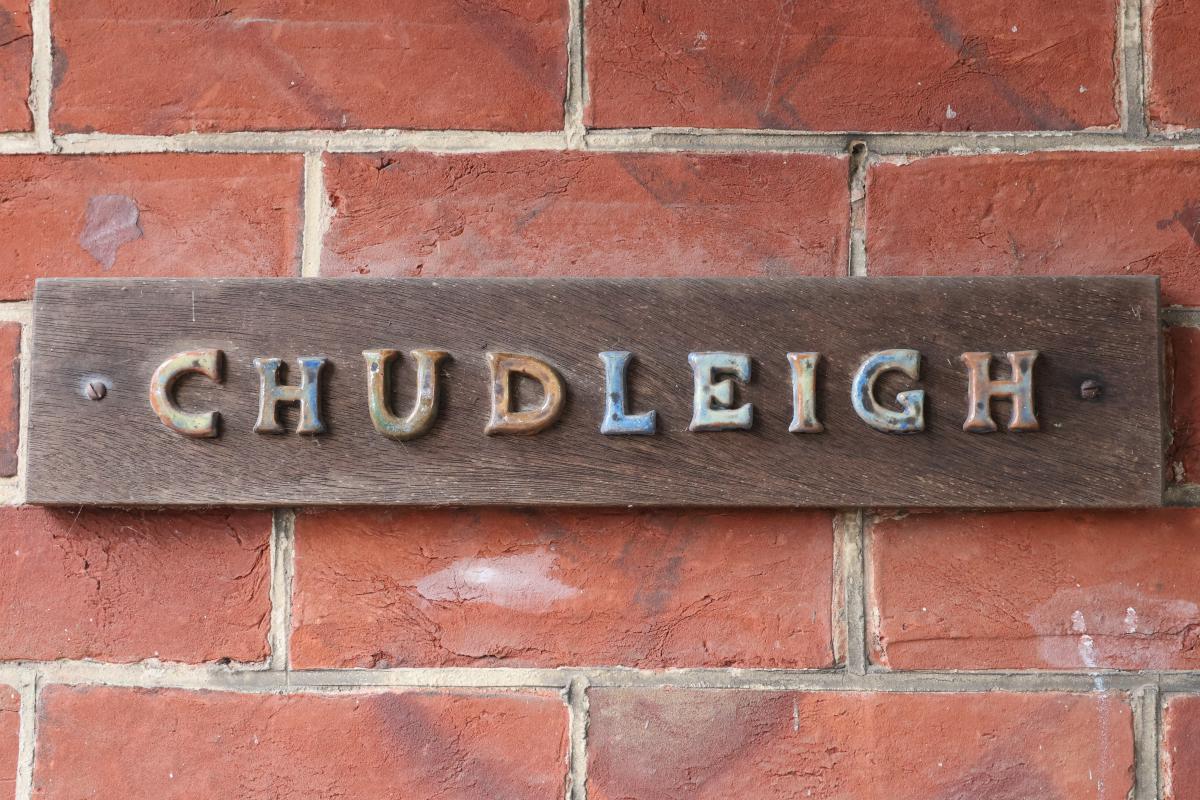
And so we come to “Chudleigh”: an ancient wool town in the Teignbridge area of Devon, which sounds very like a holiday destination to me. Mrs Frances Hillman, Hubert Hillman’s widowed mother, then took on the lease of no.14 in 1911, where the house is called “Chudleigh” for the first time. When we moved here in 1982, we didn’t fancy “Ardcote”, had as then no knowledge of “Pedmore”, and liked the idea of “Chudleigh” as a West Country village, which we had once visited. So “Chudleigh” it is, although we mostly use our postal address of “No.14”.
No.16: “Compton House” see also No.10: from 1891 until 1903, while the Wilkinson family lived there. Burgess Wilkinson’s wife’s second given name was Compton. This was not her maiden surname (Smith) but could have been to commemorate an earlier ancestor. No.10 was re-named “Compton House” when the Rev’d Burgess Wilkinson purchased it in 1903, but the family did not live there.
By 1911 no.16 had become “The Boltons” possibly named for a famous garden square in the Brompton district of the Royal Borough of Kensington.
So there you have it – the house names of King Henry’s Road considered, with very few of them still in use, I’m sorry to say.
I would like to thank Christopher Whittick and Professor Richard Coates for their kindly help and advice, as I was writing this article.
Sheila Wood 30.xii.2025
No.16: “Compton House” see also No.10: from 1891 until 1903, while the Wilkinson family lived there. Burgess Wilkinson’s wife’s second given name was Compton. This was not her maiden surname (Smith) but could have been to commemorate an earlier ancestor. No.10 was re-named “Compton House” when the Rev’d Burgess Wilkinson purchased it in 1903, but the family did not live there.
By 1911 no.16 had become “The Boltons” possibly named for a famous garden square in the Brompton district of the Royal Borough of Kensington.
So there you have it – the house names of King Henry’s Road considered, with very few of them still in use, I’m sorry to say.
I would like to thank Christopher Whittick and Professor Richard Coates for their kindly help and advice, as I was writing this article.
Sheila Wood 30.xii.2025
o